Spider Rock Hike – Canyon de Chelly
I had been on several hikes into Canyon de Chelly, including one ranger-guided one up the lower reaches of the Chinle Wash. The Park Service offered one last free guided tour to Spider Rock this season. This one was at the deep end of the canyon to Spider Rock and was listed as ‘strenuous’. The trip was to leave from the entrance station on a Sunday morning.
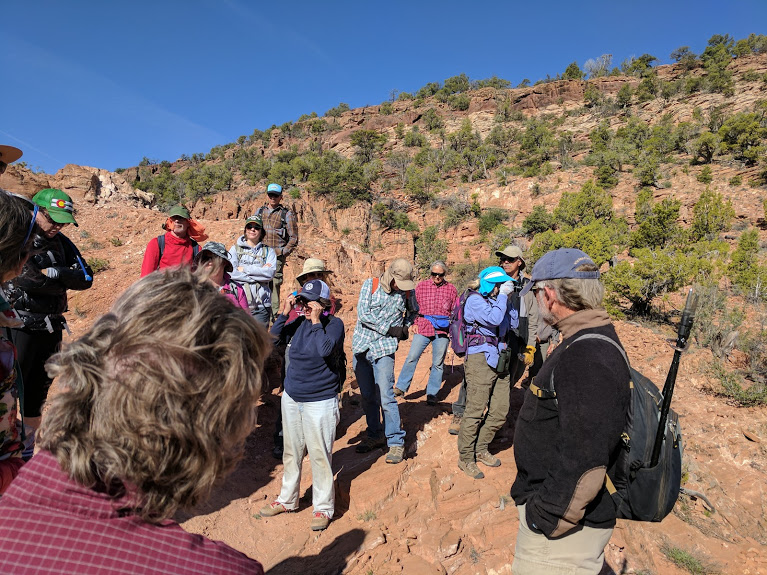
Our young guide, Jason, assembled all 16 of his intrepid hikers and we carpooled, or rather ‘truck-pooled’ up to the far eastern end of the canyon. Jason warned us that the so-called road up to where we would be leaving our vehicles was pretty rough. It was. We left the tarmac and drove around trails at the upper end for the canyon for a while. Jason, despite growing up here, got a little turned around a time or two. My experience in driving the ‘road’ at Monument Valley stood me in good stead and Red navigated the rocks and ruts with no problem. Eventually we came to a somewhat wider space and parked our cars.
Before heading down the thousand feet into the canyon Jason spoke a bit about his heritage and the lives of the peoples who live here. His mother and grandmother are Navajo, his father and grandfather Hispanic. He was born and raised on the rim of the canyon. He had strong memories of his grandmother herding sheep up the trail we would be taking. Jason gave us a brief history of what is known about the five-thousand-year history of the inhabitants of the canyon from hunter-gathers, the basket-makers who began agriculture here, to the pueblo dwellers, and finally in the early 1700’s the Navajo people who live here now.
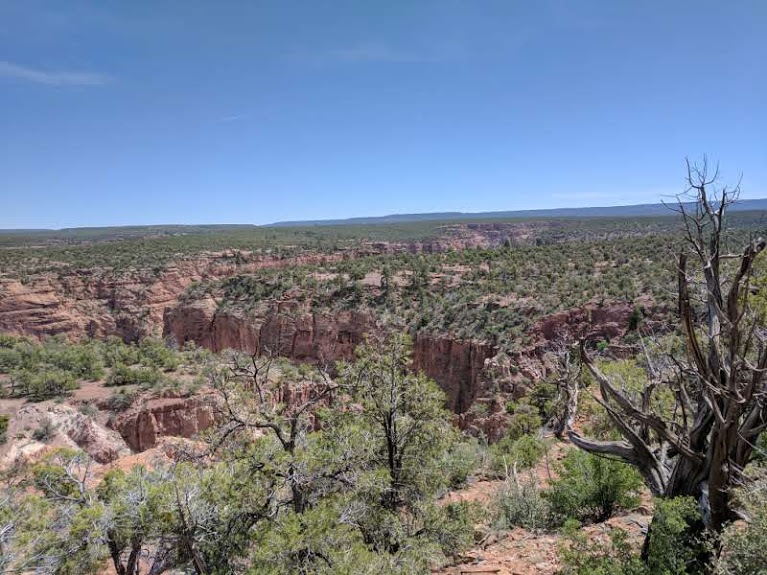
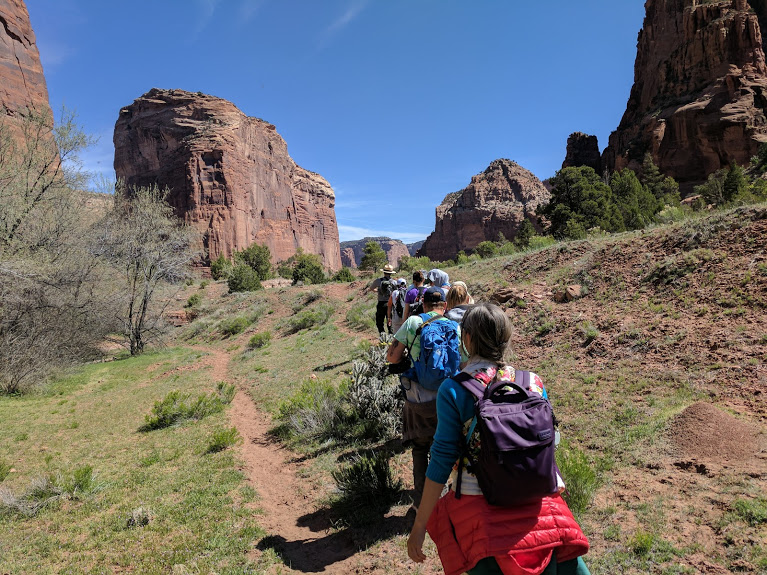
Soon we were off over a series of steep, rocky ledges. This was definitely off the beaten track. In fact, without our guide I would not have recognized it as a trail at all. The view over the plateau with various arms of the canyon visible in the distance was breathtaking.
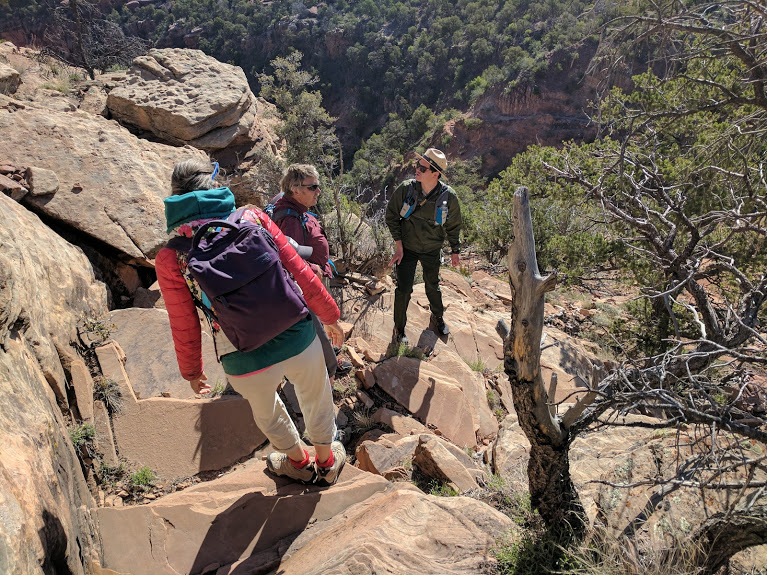
A bit farther down the ‘trail’ we intersected another trail coming from father to the south that was used by sheep and mustangs. From this point on the trail was better marked. There was even a nice warning sign telling us a guide was required on this trail. Down we went. The trail did not have any switchbacks, it just headed down relentlessly into the depths of the canyon. There was evidence of horses; I was glad to be on my two feet as the trail was narrow with some interesting drop-offs. The going (downhill) was not too bad. The surrounding cliffs soon put us in shade, but it also shielded us from the brisk and chilly wind on the top.
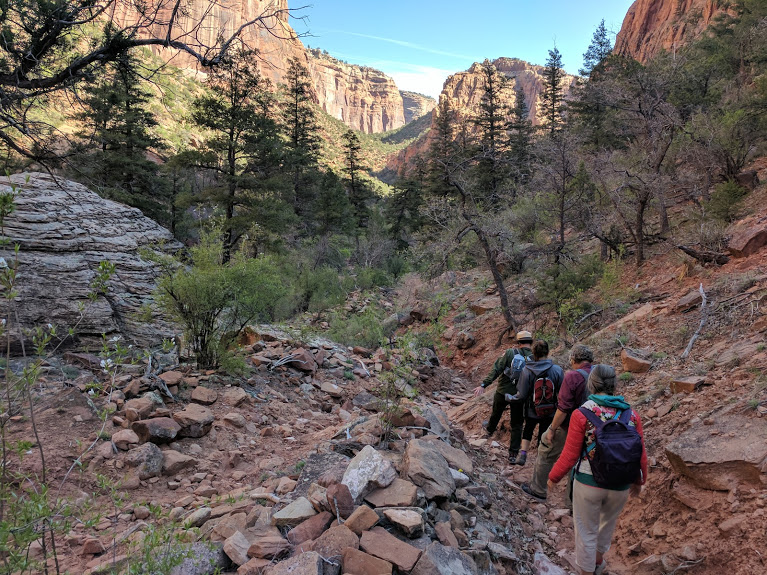
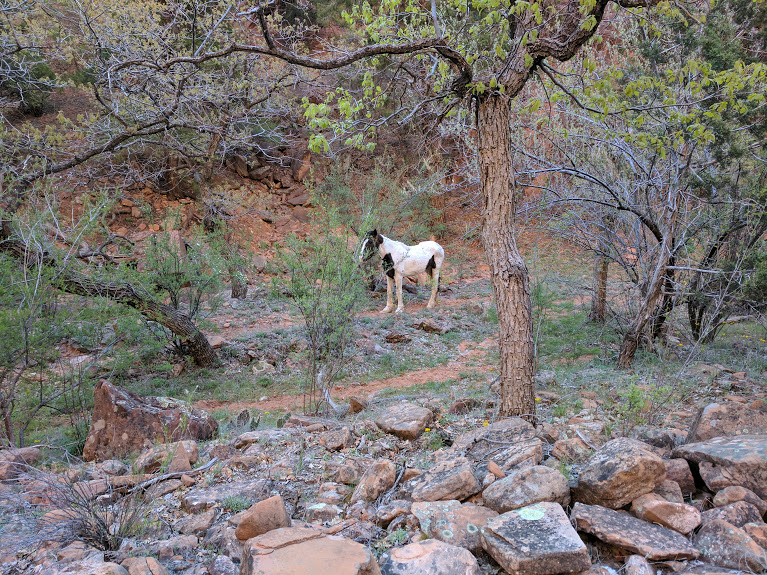
As we walked down there was conversation. Most of us were older retirees out for adventure. There were also a group of nurses who go on outings like this from their pediatric ICU facility in Phoenix, and a Swiss photographer who left New York to see America. She was staying in the canyon area for artistic inspiration. There were sights enough along the way to make the hike down both pleasant and interesting. We encountered a young mustang half way down, probably from a ranch up on the rim. He followed us down the trail for a while, staying some distance back. I was astonished at how much vegetation there was near the bottom of the canyon. A hard rock layer in the floor of the canyon, the Supai Layer, keeps the water table close to the surface and in this part of the country where there is water, there is life.
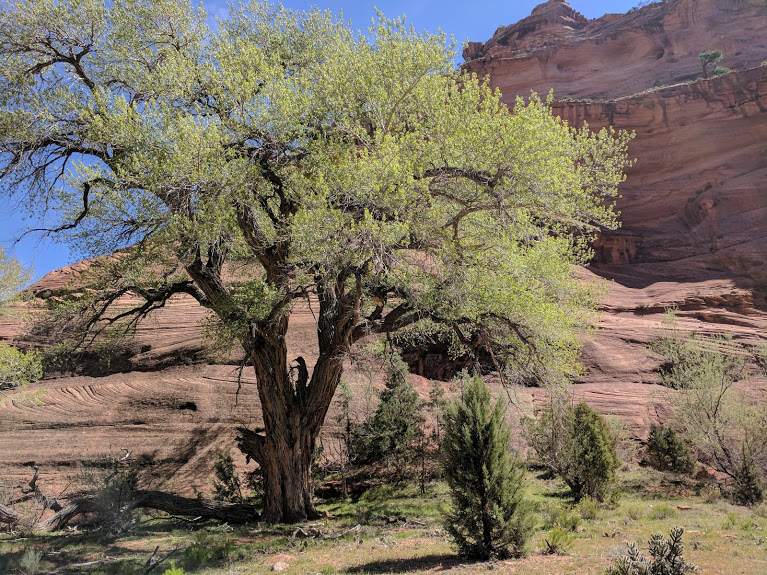
We walked along between spectacular cliffs until we reached a flat floor of the canyon. In places, a shallow watercourse was positively choked with trees. These invasive species of trees, planted decades ago to control run off, are slowly being removed and replaced with native trees including peach trees. Jason told us that for some reason people all over the world know about the peach trees of Canyon de Chelly, perhaps because no one expects fruit trees to grow in the high desert. There were some huge old cottonwoods which had been there for a very long time. We saw some petrographs including a splendid horse carved in the rock, but it had been made in the 1930’s by a Bureau of Indian Guide and so was not old enough to qualify as ancient.
Jason led us a couple of miles through the canyon to our destination: the famous Spider Rock. We sat on the grass in the shade of the trees and listened to Jason tell of the Navajo legends of Spider Woman, who taugh the first Navajo women how to weave. Spider Rock and nearby Face Rock were the frames she used to weave – a big frame. She was said to live on top of Spider Rock. Navajo children were told that if they were bad, Spider woman would come down from her perch at night and carry them up to the top and eat them. Charming/Grimm.
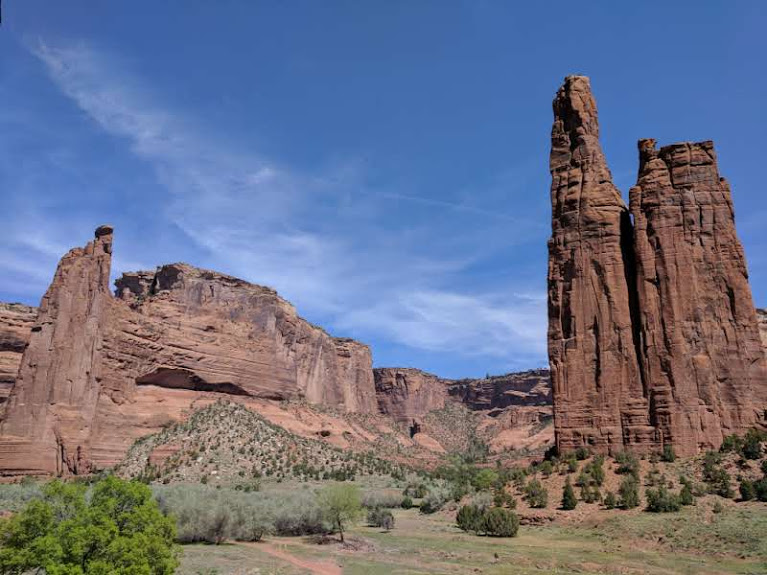
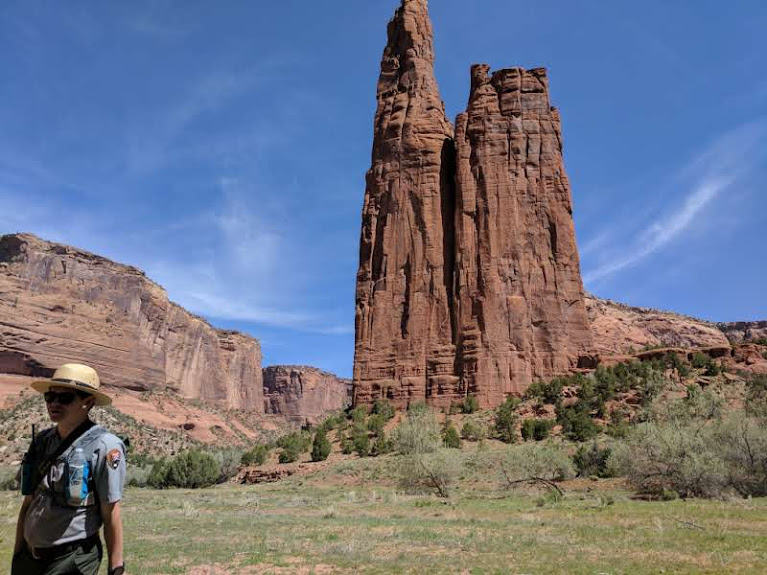
There were any number of interesting an usual things to see from a geologic, archaeologic, or botanical aspect. While we were exploring the area around the base of the rock a horse tour came by and dismounted for a bit, enjoying a brief rest. Showing the typical disdain of mounted people for those afoot, they literally went out of their way not to interact with us.
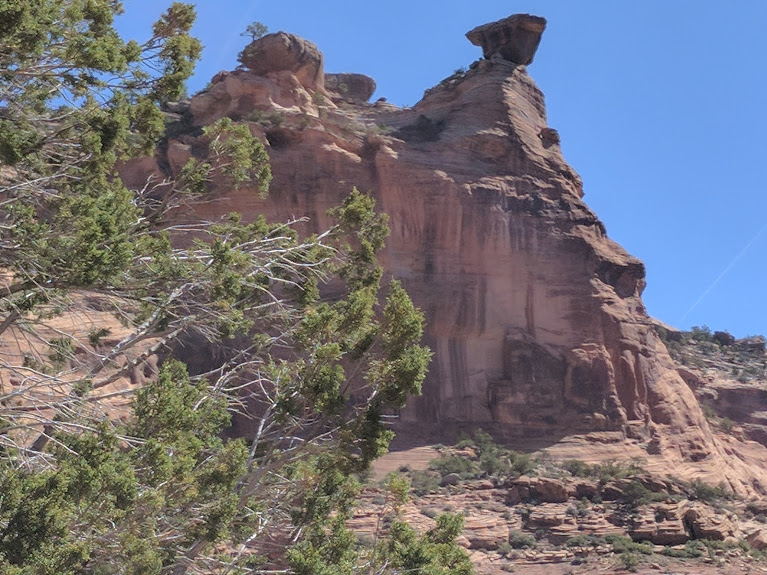

We ate our lunches down there. The day was cool and sunny. Jason then led some of us over to a fine panel of ancient pictographs done by long-departed residents. The Navajos also did pictographs but they used charcoal for their pictographs and they did not weather well.. One exception are the Navajo ‘star panels’. These are crosses located at the top of rock declivities sometimes sixty feet in the air. No one is sure how they got them there. Jason thought that might have afixed a charcoal X to the top of an arrow and shot it up to the horizontal panels above them.
It was time to head back. At first we had it easy, retracing the flat trail along the canyon floor, before turning up into the side canyon from which we had decended. That mean the return was an assent; every step of the way. This was the ‘arduous’ part of the hike. I had been at this altitude, about 6000 feet, for a couple of weeks and really did not have too much trouble. Some of the older members of the group (yes, some even older than I) found the walk to be all they could handle. We took our time, taking time to chat and examine the rock formations. Jason talked to us about a 34 mile ultra-marathon run up the canyon and then climbing up this very trail to an aid station, and returning.
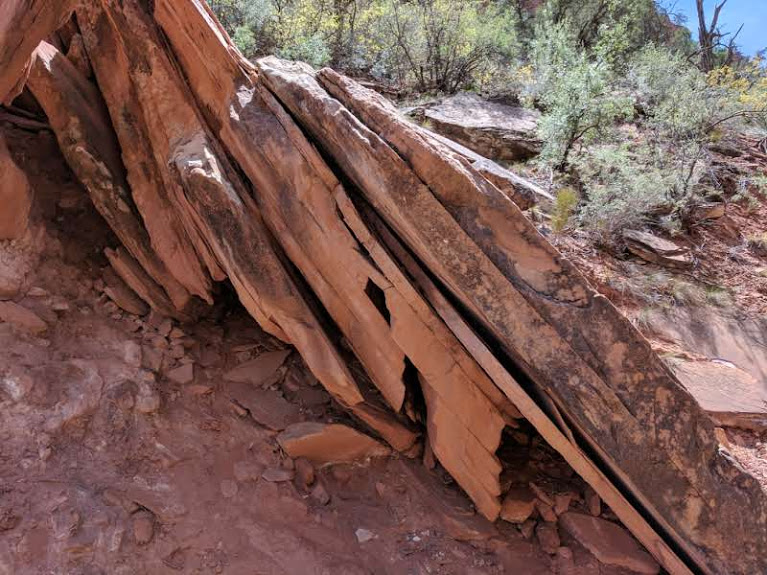
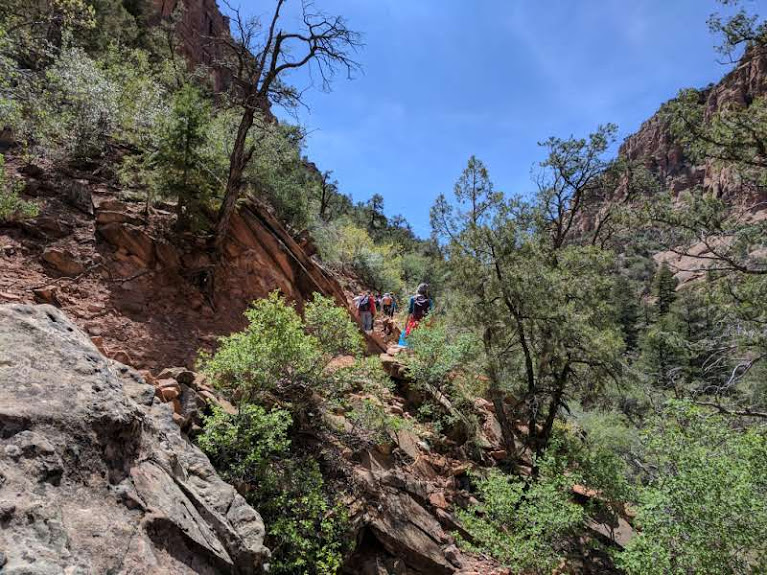
Even a climb of a thousand feet will come to an end if you just keep moving. Eventually we arrived at the top where it got really steep and rocky. Some of us found the final fifty feet or so was best handled on all fours. At the top we reassembled by our trucks and congratulated ourselves on making it up while Jason made sure we had in fact all made it out of the canyon.
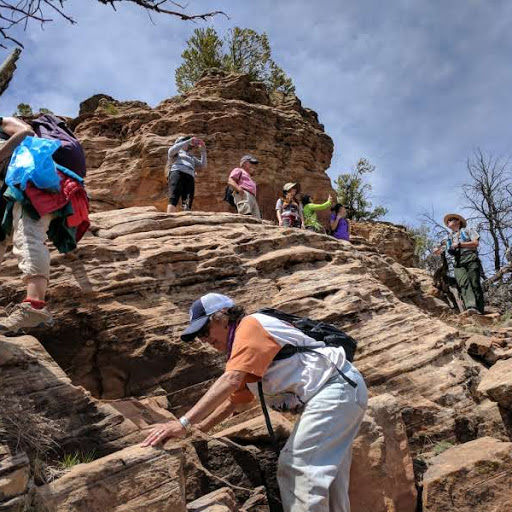
The hike down to Spider Rock is only conducted a few times a year. I was very fortunate to have had the chance to go. The weather was perfect for a nice walk. The level of effort required was about right: not exactly a stroll through the park but certainly managable without undue effort. Jason was a fount of information about the canyon and the people who have lived within its protective walls. All in all I would say it was just about a perfect way to spend six hours in Canyon the Chelly.
 TBLOG
TBLOG 