Pilgrimage to the Holy Land, 2018
Part 1 –Galilee and Northern Israel
I recently undertook a pilgrimage to the Holy Lands with a group associated with my church. This group has for years gone on a variety of tours, including four previous trips to Israel. Although somewhat expensive, they took very good care of us, making all the arrangements and paying hotels, entrance fees, and such in advance. They also arranged all transportation and provided us with guides for our time there. I was traveling with a group of twenty five, mostly from my local church, Lord of Life Lutheran in The Woodlands, Texas, led by our former pastor, Chuck and his wife Barbara. They had been on this trip five times before and led our group well.
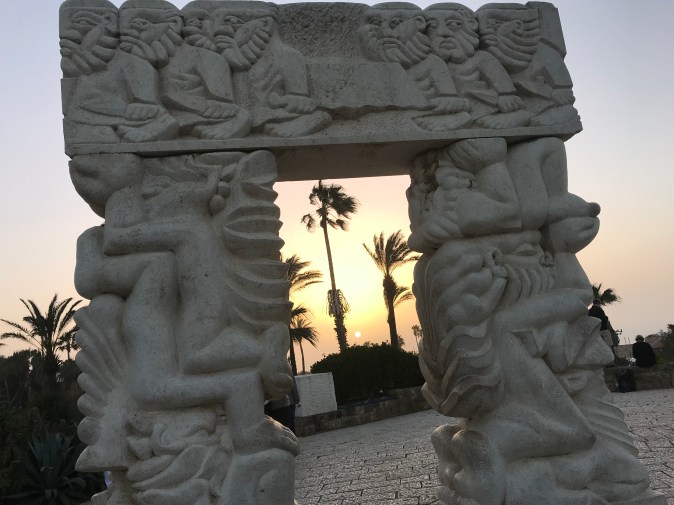
The seven thousand mile flight went well, which is to say, was uneventful. The Lufthansa Airbus 380; the largest airliner in the world – our flight held 511 people. Security from Frankfort into Tel Aviv was strict but not especially difficult. We had a comfortable wait until boarded our flight to the Promised Land. We arrived in the late afternoon and after clearing customs and immigration were taken in hand and loaded onto the tour bus we would be using for the next 12 days. On the way to our seaside hotel in Tel Aviv we made our first visit to a holy site: the location of the house in Joffa where Peter had his dream that eventually relieved Christians of kosher laws. There was a little park on a hill overlooking the Mediterranean with a sculpture honoring the event. We had a view of Tel Aviv to the north and the wine dark Mediterranean to the west.
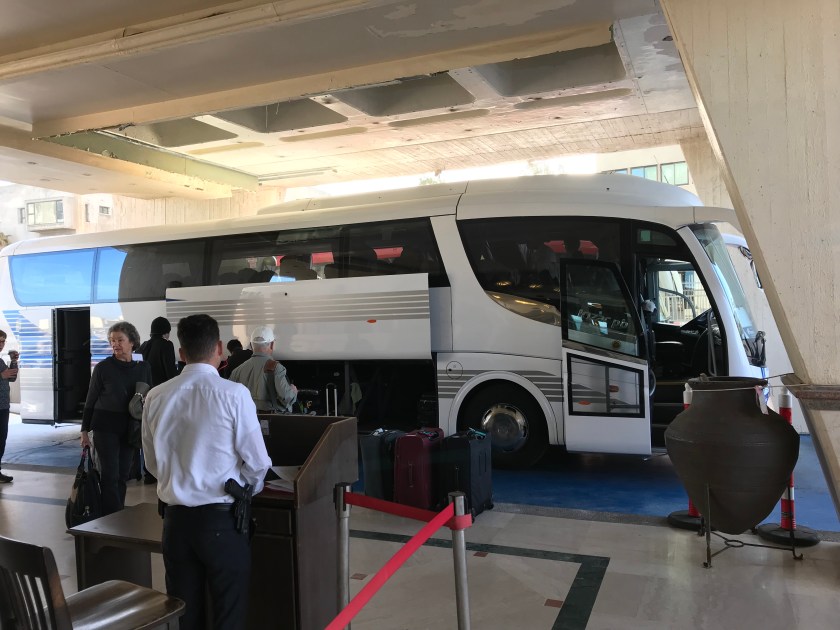
This pattern was to be repeated over and over again on our pilgrimage: a bus ride to a place of spiritual and historic significance with learned discourse by our superb guide, Mishi Neubach. Mishi has been a tour guide for over forty years. Well versed in history, theology (he has a Master’s in Early Christianity), and with extensive contacts throughout the region. He not only knew the best places to take us, but when to go so as to avoid the worst crowds.
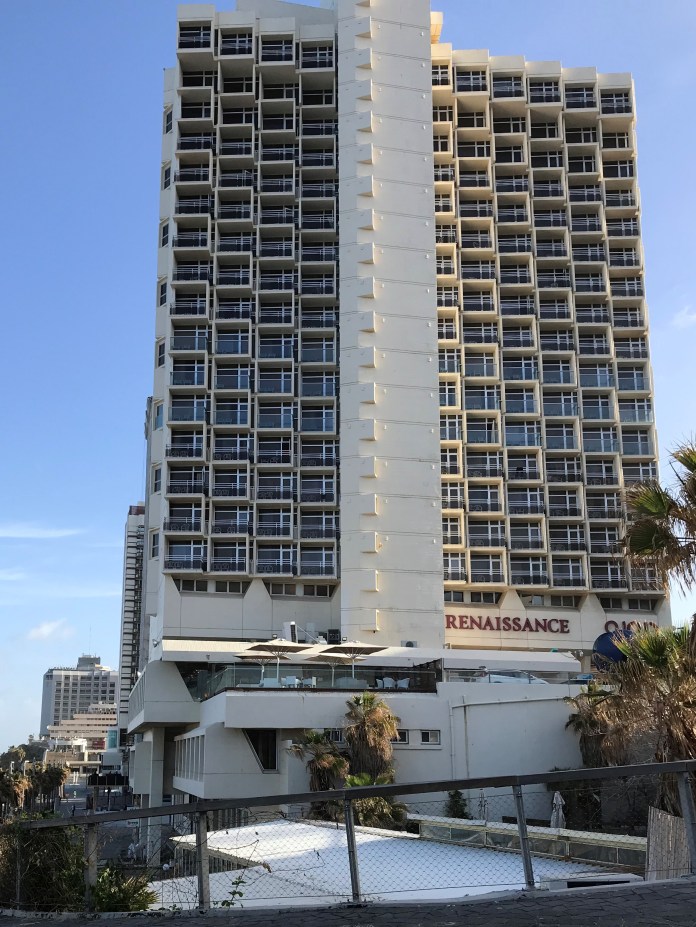
We checked into our nice seaside high rise hotel and enjoyed the first of many hotel buffet dinners. Although the sun had barely set, jet lag kicked in and I went right to bed and slept deeply – until I awoke in the middle of the night. The next morning, after what would become our normal hotel buffet breakfast we loaded on our bus and hit the road.
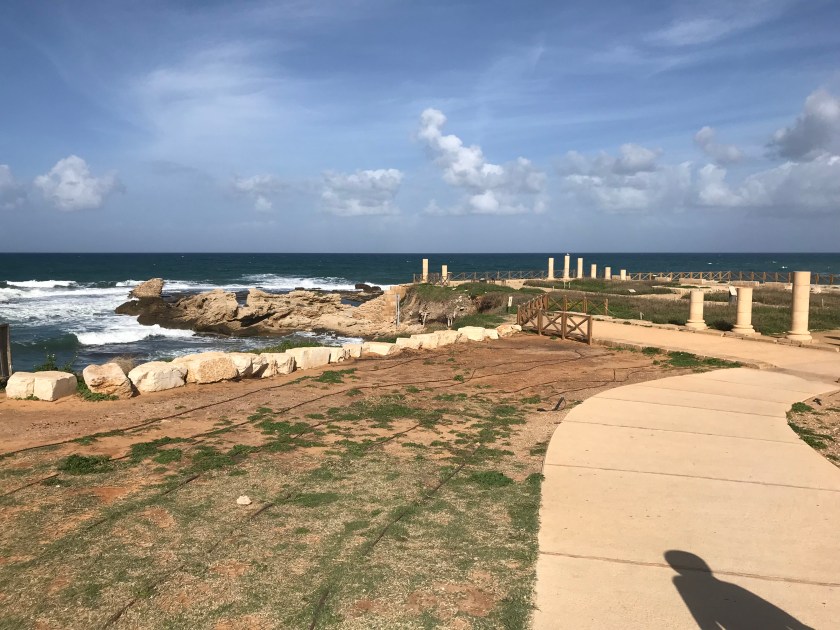
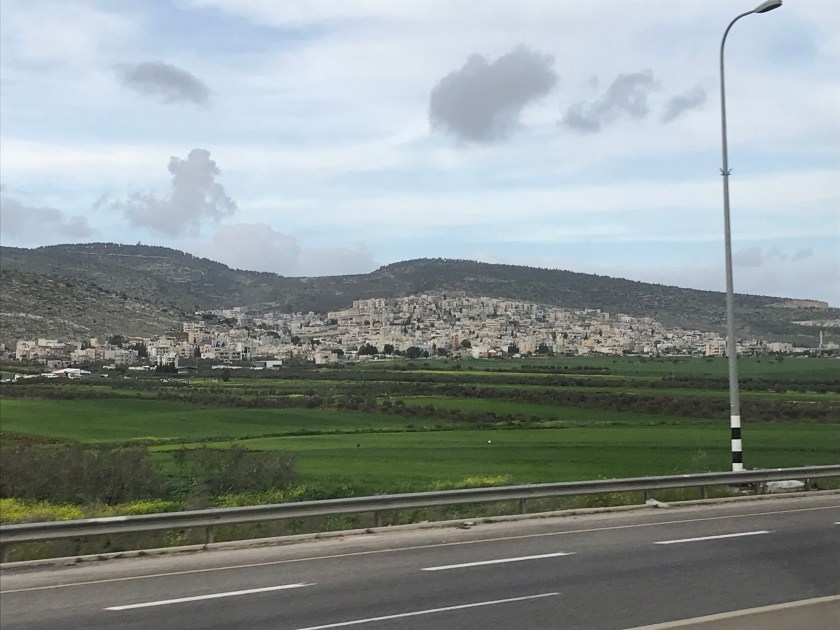
Each morning as we headed out on our bus Pastor Chuck would have a brief devotional, which was much appreciated as a reminder of why we on this pilgrimage. Our first stop after traversing Tel Aviv was Caesarea by the Sea. The harbor, town, and palaces were constructed by King Herod around the beginning of the Current Era. For centuries it was a major port and bustling town. Now all that is left is a splendid view of the Mediterranean and some impressive ruins from four surges of different civilizations.After reviewing the place we were back in the bus heading north and east. The northern portion of Israel is quite pretty. There were many fields of crops and towns that tend to be clustered on hills. Fields often have gauzy coverings over them to protect the plants from the sun and hold the water. Israel exports food from a region that was once virtually barren. We drove an hour or so up from the coast to Mt. Carmel, the site of Elijah’s confrontation with the pagan priests. There is, like in most of these places, a religious building – in this case a monastery. Mishi informed us that the Anglicizing of Hebrew words ruins the sounds which give meaning of the words. Elijah, properly pronounced, means my ‘God is YAHWEH’.
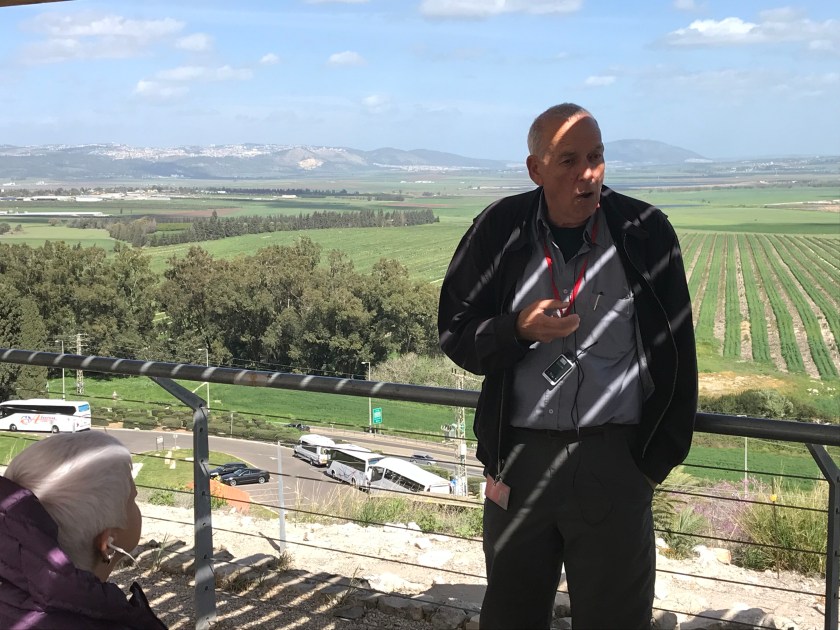
Then we were off to Megiddo, a very ancient place located on a tell overlooking a strategic crossroads. A tell is a mound formed by building on top of previous structures. Megiddo, reputed to be where Armageddon will be fought, has no fewer than twenty five discovered levels. People have been living here a very, very long time. This region is on the crossroads between all of the major civilizations of ancient times.
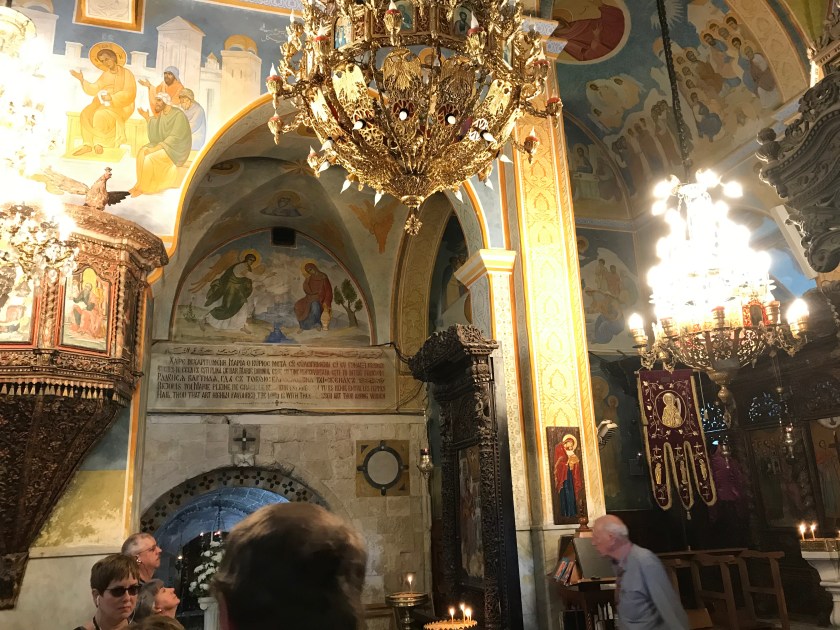
Our next visit was to Nazareth, the childhood home of Jesus. It is a not a very clean or orderly place, ‘can anything good come from Nazareth?’. We briefly visited a Greek Orthodox church located at the town well and a crusader chapel which included another spring, almost certainly visited by Jesus in his youth. Like Jesus we shook the dust of Nazareth off our feet and headed for Galilee where our hotel awaited.

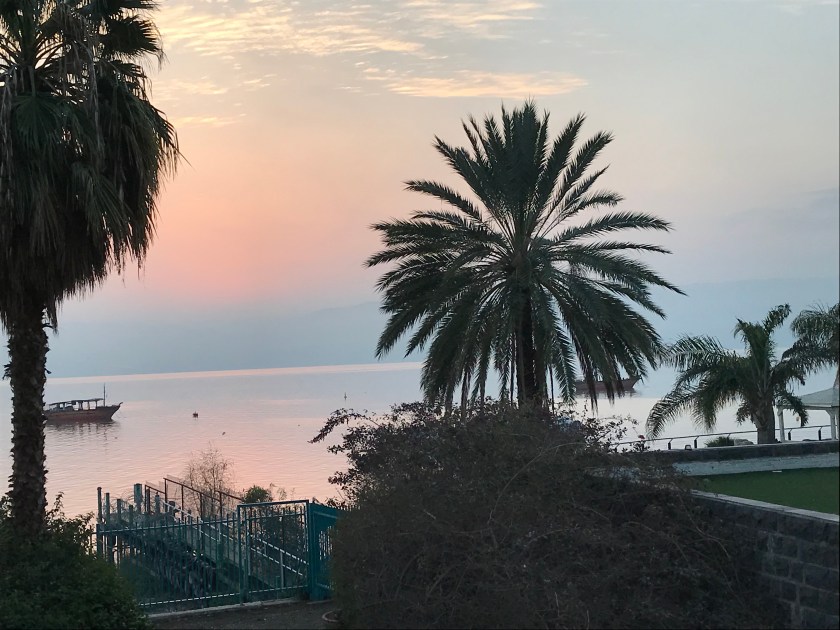
The Sea of Galilee, or more accurately ‘Lake Tiberius, is not really very big: about thirteen miles long by eight wide. Surrounded by hills, the shore is about 700 feet below sea level. Despite being such a relatively small lake it is very important. Jesus taught in this area for about three years. Many of his apostles were fishermen on this lake. To this day it is by far the largest fresh water lake in the region and people still make their living by fishing on it. Our hotel, on the banks or the lake would be our base for three nights. We began our day with a ride on a fishing boat down the lake to a museum located right next to a kibbutz where our bus was waiting for us.
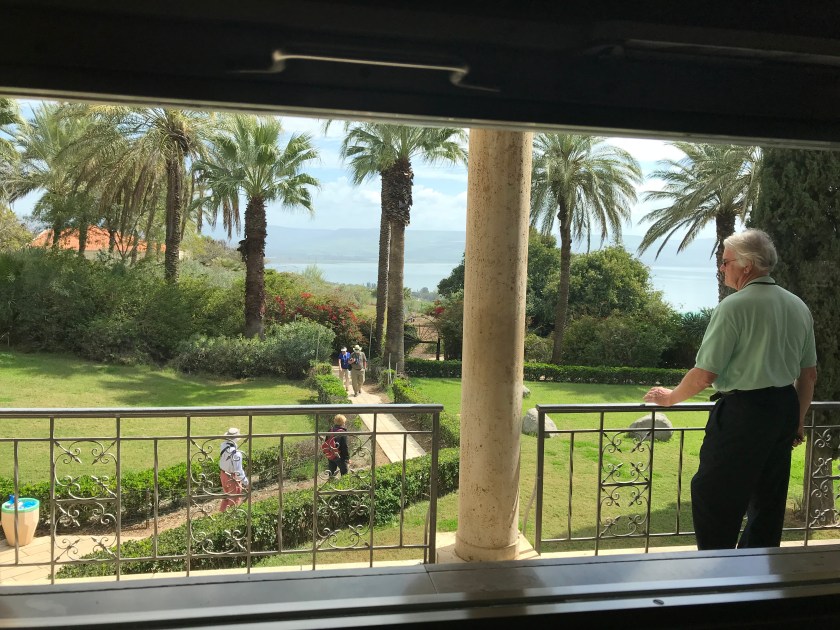
We then had several stops at a number of places mentioned in the Gospels. Tabgha, in the hills at the north end of the lake was the location of the miracle of feeding of the five thousand. The hills make natural amphitheater making it easy to preach to many people. Leaving the monastery there, we drove over and up to the beautiful octagon chapel at the Mount of Beatitudes where Jesus was said to have given the Sermon on the Mount. The chapel is surrounded by a beautiful set of gardens which give spectacular views. It is a profoundly spiritual place. Perhaps that is why, even though I was holding onto the guard rail I missed my footing on a small down step. I fell heavily and as I went down I distinctly heard a popping sound.
It was a bad fall and people around me hurried over to help.
“Are you okay?” they asked.
“No.” I replied grimly.
And I wasn’t. Although it was eerily pain free, I could tell immediately that I had damaged myself. For one thing, I could not extend my right leg. Later I discovered that I had ruptured the Patellar tendon, pulling it right off the bone on my knee. I was able to get up and limp to the entrance. I was very worried, but since I could still walk, sort of, the only thing for it was to keep on. And that is what I did for the next ten days. I could get along alright on flat smooth stretches but alas, the Holy Land doesn’t have many places like that. It is a hilly country with some of the stairs dating back over a thousand years. Some of the paving stones were the same ones put in by King Herod in the time of Jesus! I was very fortunate in my fellow pilgrims. They were unfailing patient and very kind, with donations of Advil and other pain meds. Leanne even produced a folding cane which she had brought ‘just in case’. Without it, I would not have been able to see as much as I did. A blessing upon her for thinking ahead to bring a cane she did not herself need.

Lunches were always a bit different each day. We did some buffets, had pita bread stuffed with good kosher stuff, and even pizza once. Lunch this day was at a restaurant overlooking the Sea of Galilee which specialized in St. Peter’s fish, a tilapia fried and served whole. The owner encouraged us to eat it with our fingers. The fish was surprisingly good.
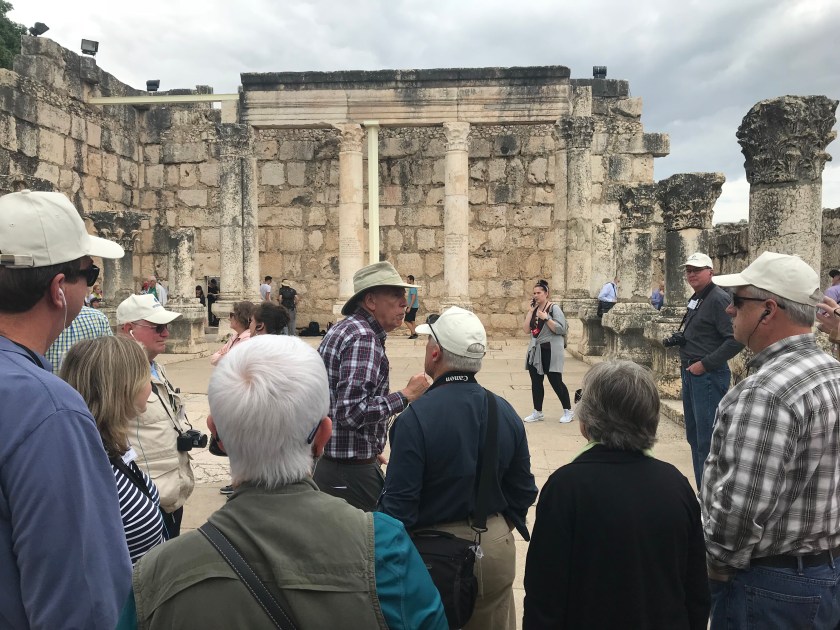
From the Mount of Beatitudes the bus took us to Capernaum, a fascinating place where Jesus lived and preached. There were ruins, of course, and a modern church crouching over foundations of building where Jesus may have lived. The new church managed to look like a combination of an alien space ship and a spider – not an attractive building. The location, however was beautiful. Immediately behind some of the foundations was a synagogue undergoing restoration. Although it dated ‘only’ from 300 CE the layout was typical of the kind of place where a young rabbi would have gone to preach.
Of note, our guide, Mishi was always careful to say things like, ‘this may not have been the exact spot where this happened, but it was in this immediate area.’ He also reminded us that although several waves of conquerors had swept over this area in the past, Roman, Byzantine, Moslem, Crusader, and Turkish, each with their own buildings, the land itself has not changed all that much. Capernaum, like the Mount of Beatitudes, is a holy place with palpable spiritual energy. Many of my companions shared my feeling of exhaustion after spending time in some of these powerfully spiritual places.
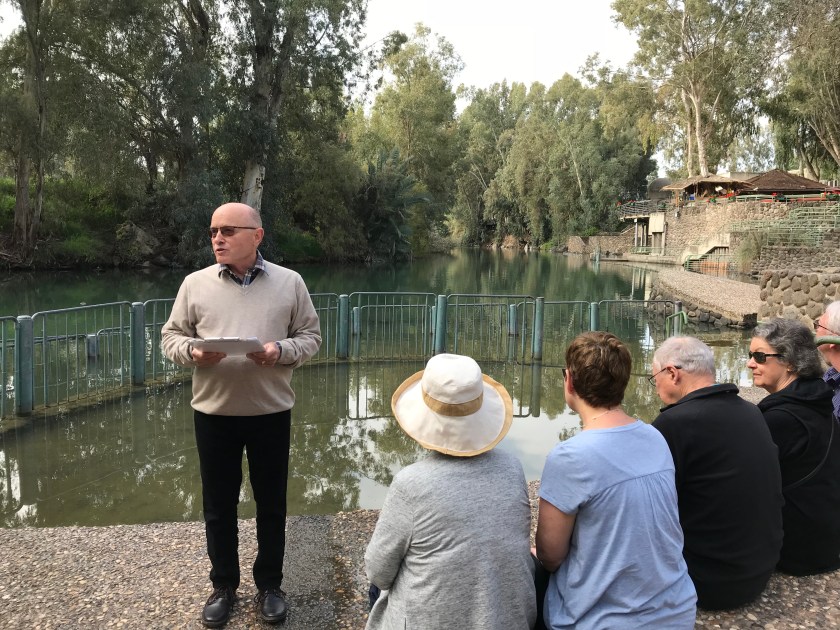
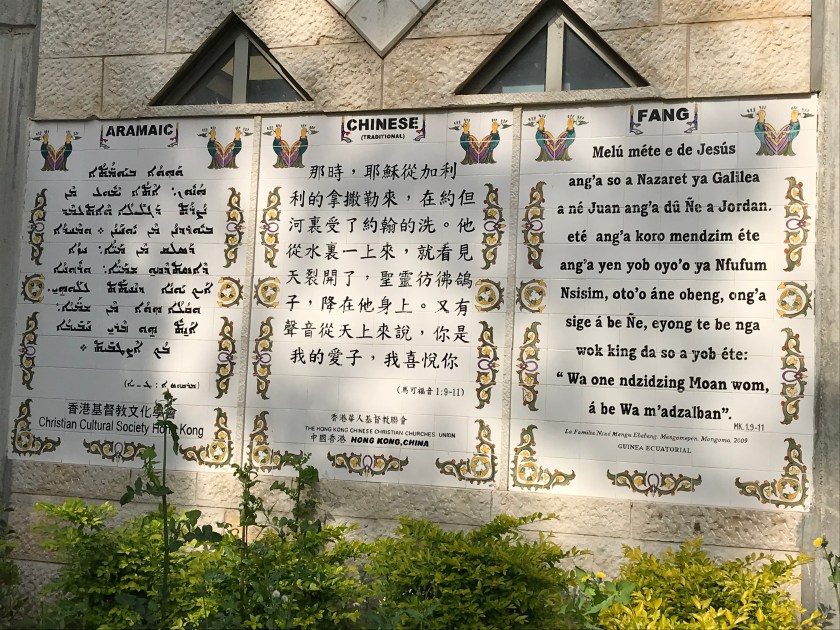
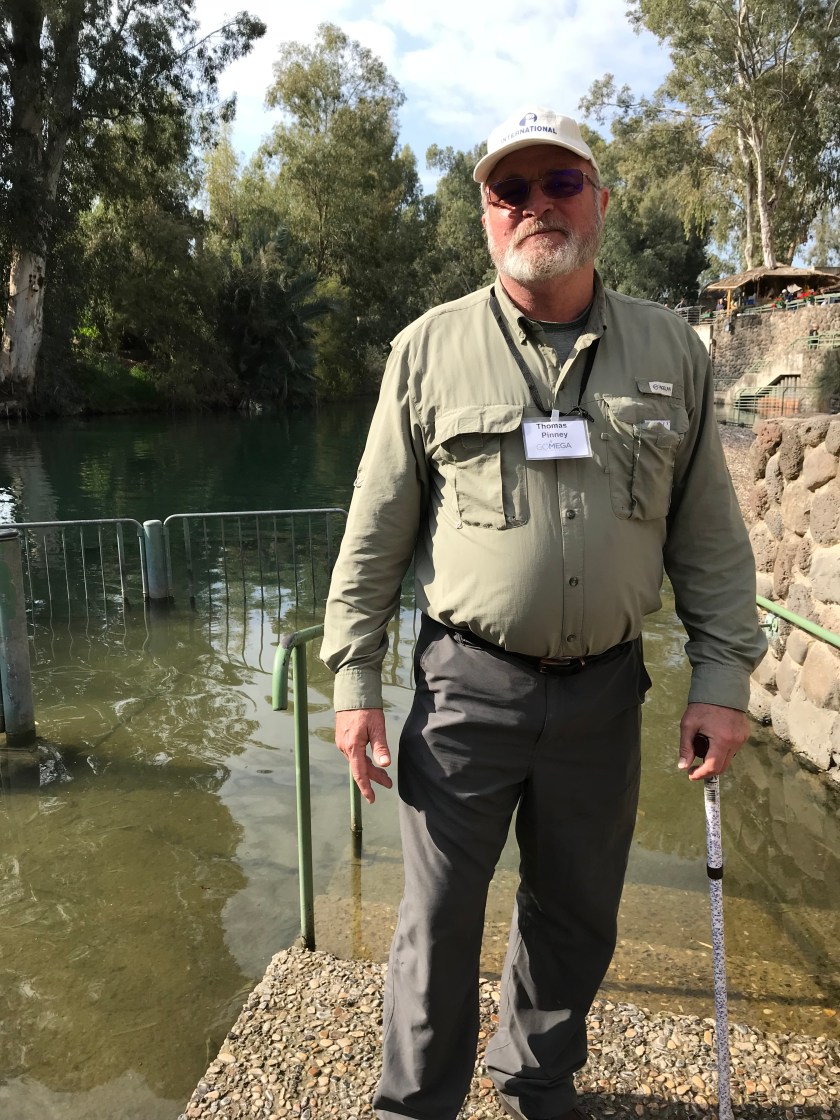
On Sunday we left early to go to the Jordan River. Back in Texas this ‘river’ would have been called a creek. The location was scenic not historical. The facility there had us going in and out via the gift shop, the sure sign of a place bent on extracting money from the tourists. I was impressed by dozens of large tile plaques with scripture, each in a different language. Thanks to Mishi’s experience we got there before the crowds and were able to corner one of the sections next to the river. There we had a few brief scripture reading, after which we each came up and had Chuck reaffirm our baptism. As we left we could see bus after bus arriving with tourists eager to visit and be baptized in the Jordan; the facility had nice white robes they would rent to you for that purpose.
We made a brief foray to Zippori, not far from Nazareth. These ruins are what remain from a center of Jewish religious thought in the time of Jesus. Mishi speculated that it was likely young Jesus studied here. Next to the Israeli ruins were some Roman ones. These were especially interesting because of the mosaics in the floors. They looked more like tapestries than stone. They were saved but not completely restored – deliberately so. The holes in the patterns added to the piquancy.
From there our bus took us to Beit She’an, a set of ruins in a place that has been continuously inhabited for over 5,000 years. The Roman ruins there were extensive and well restored/preserved. I especially appreciated the exemplary engineering that kept stone arches standing for millennia even though the area suffers from periodic earthquakes. Here, as for the rest of the trip, whenever the group had an excursion that required a lot of walking, especially over steps I would be excused to wait for them near the entrance where I would have a nice cup of tea and wait for the group to return.
Our final stop for the day was on the Sea of Galilee again at a place called the Primacy of Peter. Located on the shores of the Sea of Galilee, there are beautiful gardens leading down to a Catholic chapel on the shore where Jesus met the disciples after his crucifixion. There was a small pavilion in the gardens with seats and a table. We took advantage of this to place a cloth on the table so that we could have a simple communion on this lovely Sunday afternoon. After a few prayers Chuck began a short sermon which was interrupted by an angry Catholic monk. Yelling in a mix of Hebrew and Italian he made it clear that this was ‘a Catholic place’, and if we did not leave immediately he would call the police. Mishi calmed him down a bit and we told the monk we would not have a communion service there. There must be something about the Holy Land that enhances all aspects of spirituality including religious intolerance. We saw a number of instances where various denominations had to negotiate rigorous agreements to share the many sacred sites in the region.
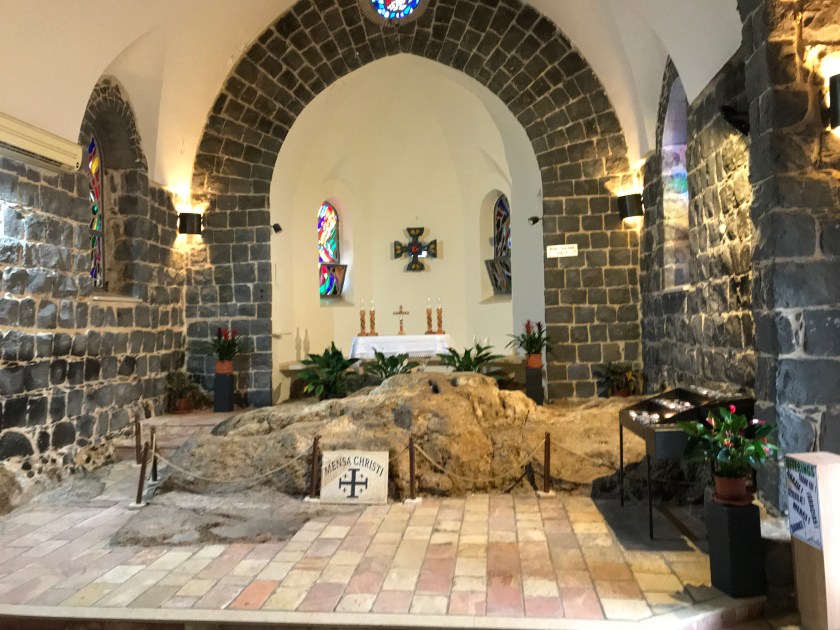
We finished our prayers and went down to the beach. Chuck and Barbara brought the bread and wine and each of us quietly came up to them on the beach to get our communion. Then it was back to the hotel. The next day we would be moving to a new area with new discoveries.
 TBLOG
TBLOG 