Pilgrimage to the Holy Land, 2018
Part 3 – Jerusalem
We had been in the Holy Lands for a week. Now it was time to do the most important part of the trip, the pinnacle of any pilgrimage. We were going to Jerusalem. We left our luxury hotel in Amman early. Our goal was to get to the border between Jordan and Israel around 0815 and reconnect with our bus and guide Mishi. The trip down was uneventful though once again it took an hour and a half to cross the border. Once ensconced in our Israeli bus we headed to Qumran National Park where the Dead Sea Scrolls were discovered.
The caves where the scrolls were found are in a wild and desolate area not too far from the north east corner of the Dead Sea. Mishi did an excellent job of expanding on why the scrolls were so important to both Jewish and Christian scholars. We used the ‘whisper radios’ – tiny short range radios with earbuds throughout of trip. They really helped as we could always hear Mishi’s commentary without interference from other groups. The museum there does a good job explaining about the Qumran community. These people, sometimes referred to as the Essenes lived an austere life. In addition to copies of the various chapters of the bible, some of the Scrolls detail the many rules for this influential sect.
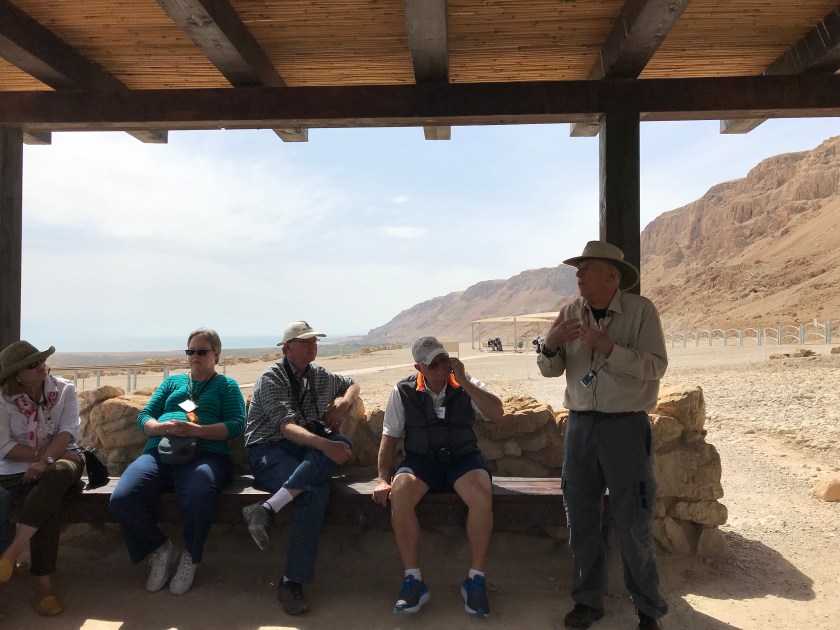
As interested as I was in the museums and its artifacts, I, like the others was eager to go ‘up to Jerusalem.’ The distance is not that far, but it is considerably up. Although Jerusalem is only at about 2500 feet, Qumran is 1400 feet below sea level, and the road has to wind around the mountains. As we climbed up toward Jerusalem Pastor Chuck lead us in reading Psalms of Ascent, starting with Psalm 121. These were the psalms that pilgrims would traditionally sing as they made their way up to the holy city Jerusalem. Hiking or riding in a bus the impact is still powerful.
We made our way through the outskirts of the old city. Jerusalem is the largest city in Israel with a population of about 850,000 and has spread considerably from the historical center. Our bus wound up the Mount of Olives until finally Jerusalem spread out before us. What joy! We debarked from the bus and made our way to a panoramic view of the city. There it was, spread out before us. The most obvious building was the Dome of the Rock, a Muslim mosque built over the old temple. Mishi was able to show us the some of the major landmarks, temples, churches, and many other holy sites for a city that is sacred to three of the world’s great religions. He pointed out the valley of Gahanna on the left, and the huge number of graves in the cemeteries that cluster around the city, particularly around the Eastern or Messiah gate. The gate has been closed, indeed bricked shut for many centuries for this is where tradition says the Messiah will enter Jerusalem on the Last Day. Mishi opined that many people wanted to be buried here so they would not miss the event.
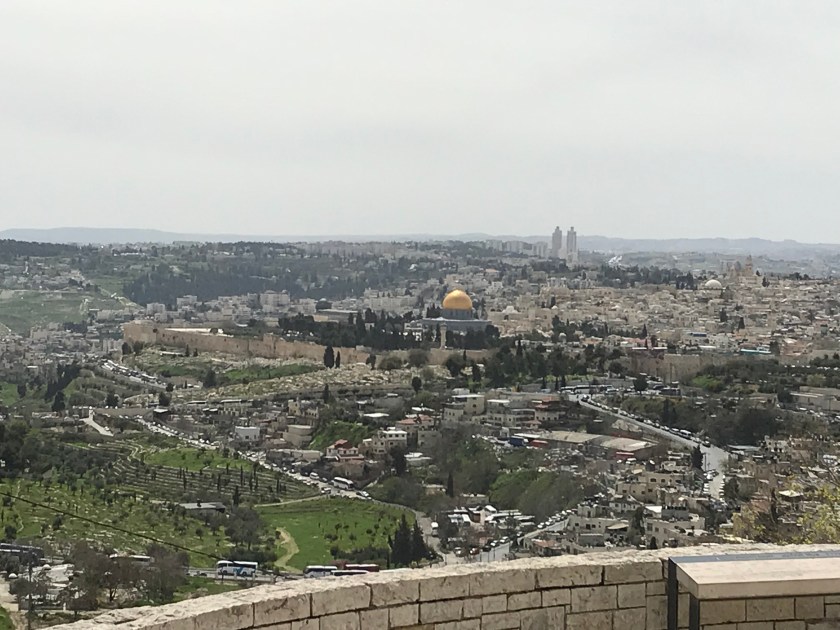
“Of course, that will also be the Judgement Day, so perhaps some of these people may not want to be here after all,” Mishi said dryly.
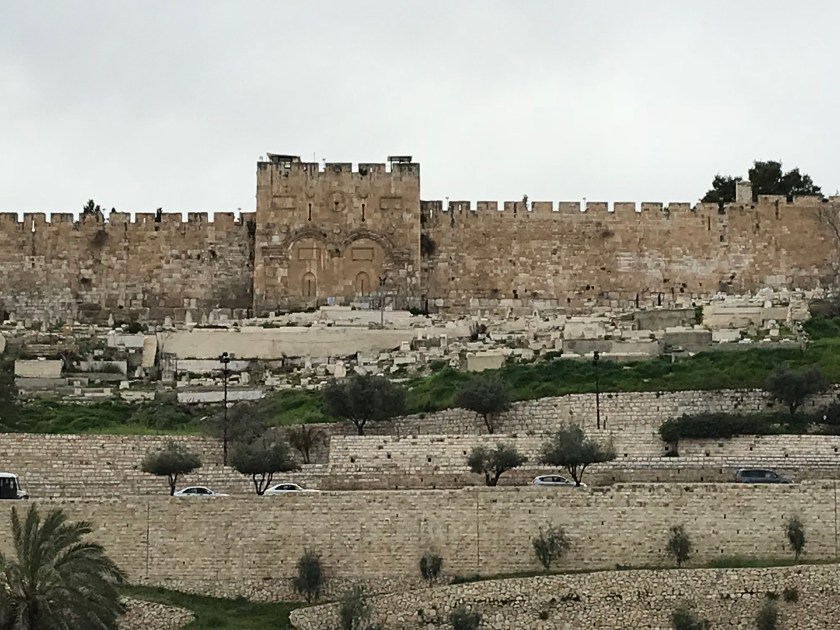
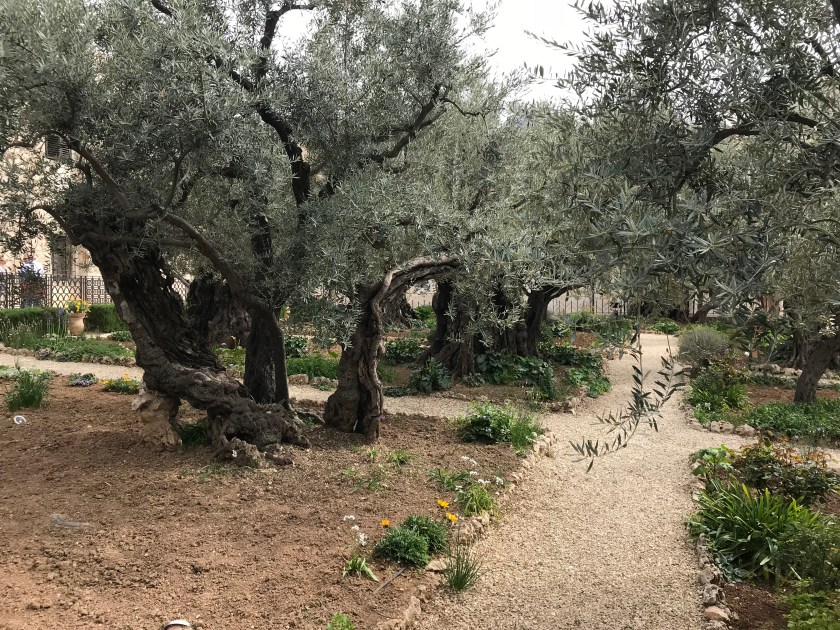
We know that Jesus entered Jerusalem through that eastern gate, coming down on Palm Sunday from Martha’s house on the Mt. of Olives. We retraced that journey down to the Garden of Gethsemane. The road was narrow, walled on both sides, and steep. I tried to stay in the spirit of the walk down but my knee did not like the long downhill and I lagged painfully behind the others. Gethsemane means olive press, so it was probably a small olive grove in that time. There are about a dozen very old olive trees there now in a beautiful and deeply moving garden. These trees were probably planted in the time of Constantine, as they are around 1700 years old. Mishi pointed out that this was the place where Jesus had his last chance to avoid his ordeal. Instead of waiting for his arrest in this place, he could have turned and walked up the hill to Martha’s house, then gone back to teaching in Galilee; the high priests would have left him alone. The Garden was one of the most powerful spiritual places I have ever experienced.
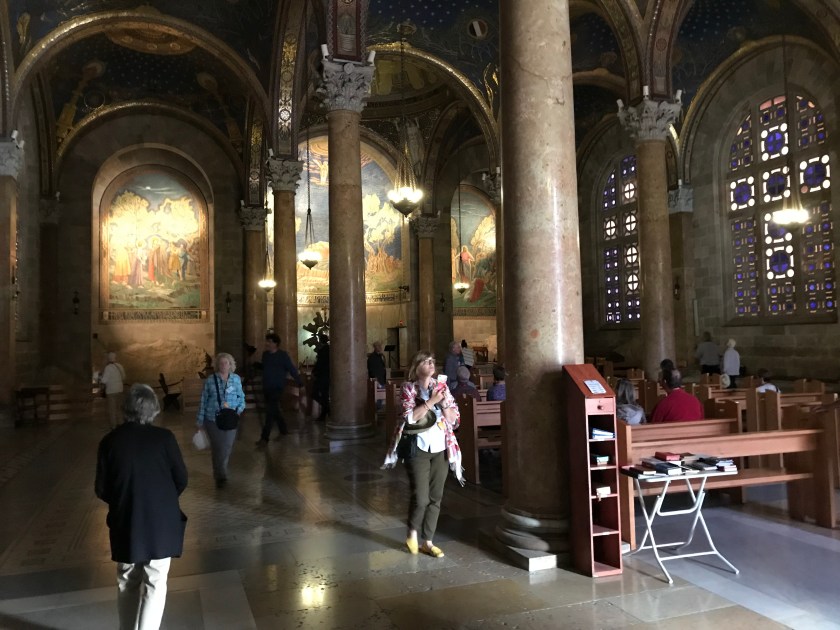
The beautiful Church of All Nations is next to the olive grove. It is not large. Built in Byzantine times and reconstructed by the Crusaders, and reconstructed in the 1920s. It is open to all denominations and used by the many different groups of Christians in this city. The church is a peaceful place for prayer and contemplation.
It was late afternoon before we had lunch at store where we had the opportunity to buy olive wood crosses and sculptures as well as a wide variety of truly ancient artifacts and jewelry.
Even though it was only about 1630, we were glad to check into our hotel in Jerusalem. It had been an exhilarating and exhausting day. My single room was a third the size of the luxury rooms I had had in Jordan but I liked it; I only needed the room to sleep. The hotel buffet was good, and the drinks were affordable. I limped back to my room and went to bed early. I had a lot to process.
The next morning we continued our exploration of the old city. Mishi had to juggle the schedule due to the various Sabbath constraints. This was Friday so none of the Muslim areas were open. Saturday, the Jews would be observing Shabbat. Sunday was easier as Christians were not as strict in their observation of the Sabbath.
We visited the Holocaust Museum outside the old city. As you would expect, it was an extremely well done and deeply moving experience. Mishi made sure we got into the Yad Vashem for the 1.5 million children who were murdered by the Nazis. This memorial houses one round room, dark except for seven candles in the center with a catwalk around the edges. The room is filled with discrete mirrors which amplify, and reamplify these lights, reflecting them above, below, and all around the catwalk. A voice quietly reads out names of children murdered in the Holocaust and their ages; some were as young as two and three. You could not help thinking of all those innocent lives snuffed out by hate. It was very affecting – most of the women emerged from the darkness with tears in their eyes. The rest of the museum detailed the awful history of the holocaust year by year, putting human faces to a most inhuman event.
Following this somber visit we returned to Jerusalem where we walked through the old city. Jerusalem is no tourist exhibit – it is a living and thriving city. We were charmed to see little kids racing through the narrow streets playing innocently, untroubled by supervising adults; recalling our own carefree childhoods. As we walked through the narrow streets, Mishi talked at length about the rich and complicated history of this most fascinating city.

- No fears for these kids playing in the street in a residential section of old Jerusalem
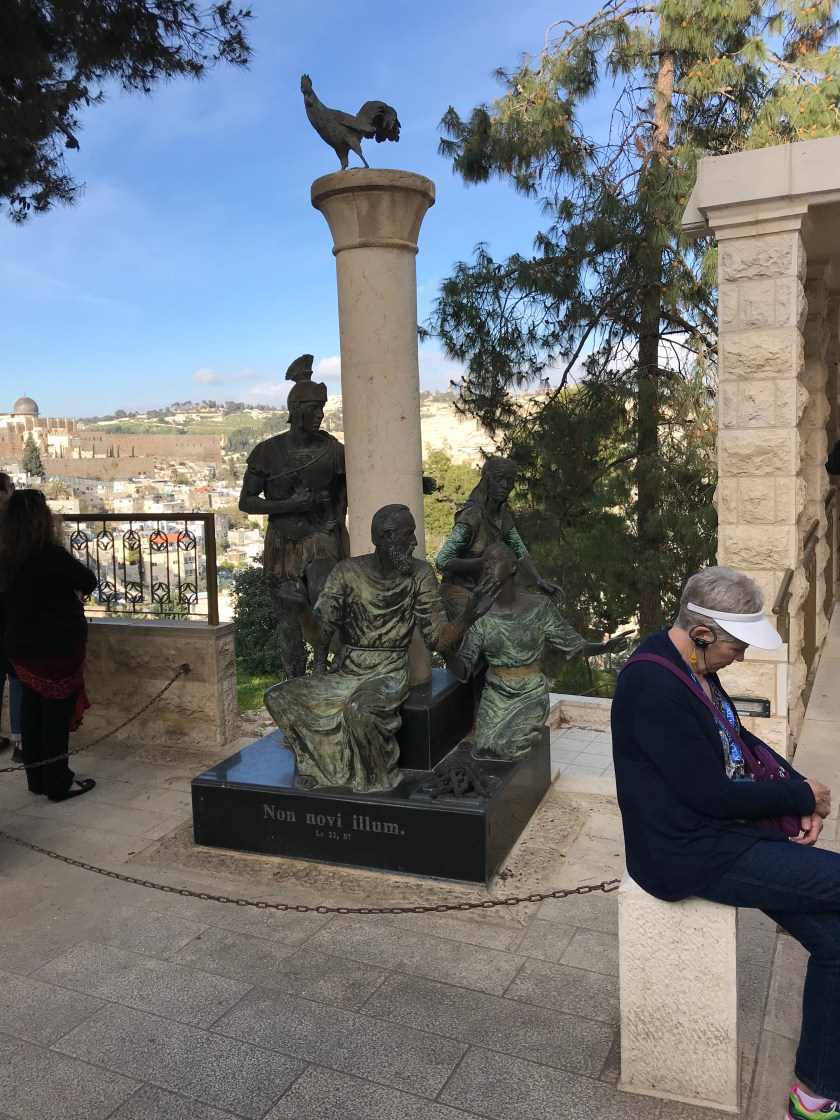
We visited the site where the Upper Room is believed to have been and then to the house of Caiaphas, where Jesus was taken after his arrest. The ruins have been partially excavated but include a small cell where Christ was held that night after his arrest. There is a moving statue there commemorating Peter’s third denial of Christ. Again, these are very powerful places; almost overwhelmingly so.
We had a chance to wander around the city and do some shopping from the vendors lining the streets. There are plenty of tourist dollars to be had and plenty of canny merchants to have them. Again, we returned to our hotel well before dark, tired from the emotional day.
Saturday was another early day. We began the day by driving the short distance to Bethlehem. We had to change guides again as Bethlehem is in in the Palestinian Authority. It was important to be there early as the line forms early. Sure enough, even though we were there at 0830 we had to wait about 45 minutes behind other groups. About 10,000 people visit this site every day, and it is quite congested. While waiting we saw how competitive group guides were in getting their tours ahead in the line. Threats to call the police were made. We also found that three major denominations – Catholic, Orthodox, and Coptic – all vie to hold masses in the church. Peace treaties were formulated, rules established, schedules for masses are made and are scrupulously followed.
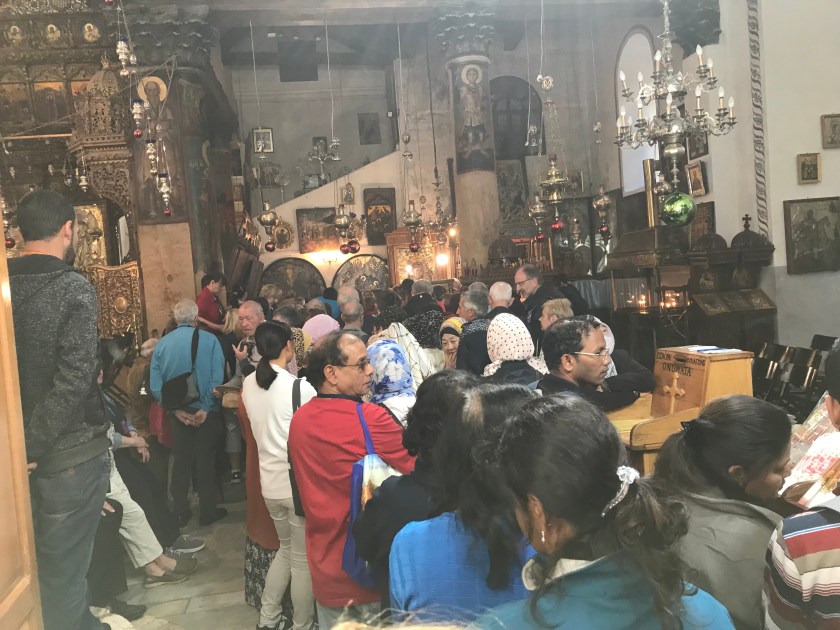
The elaborate Church of the Nativity built over the presumptive site of the nativity is undergoing significant restoration but is still magnificent and we had plenty of time to admire it while awaiting our turn. Most buildings in this ancient land, even humble stables, tend to get submerged by follow-on construction of monasteries, mosques, churches, and such.
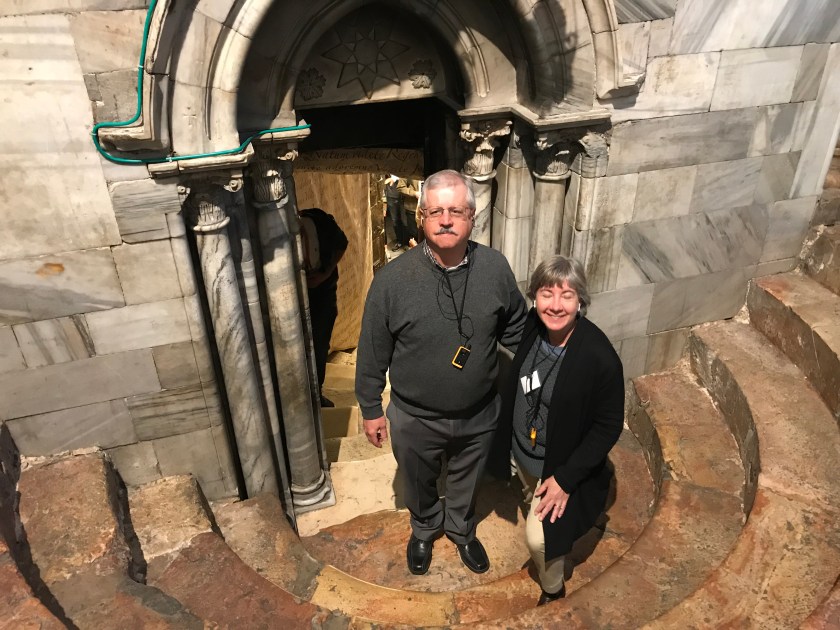
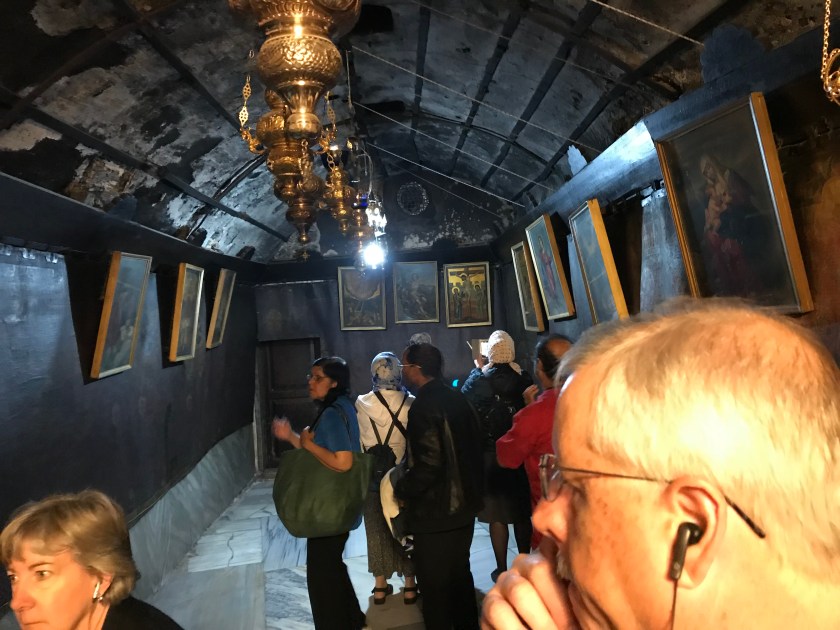
The actual entrance to the holy site is steep, narrow, and low – not the easiest thing for a guy with a seriously gimpy knee to manage. Inside the stable is small. The designated location of the birthplace of Jesus is marked with an ornate star which some people (with healthy knees) knelt to touch. Our group reassembled in the back of the cave and sang some Christmas carols; the acoustics were good. I found the singing unexpectedly touching.

We rejoined our bus and Mishi and headed back to Jerusalem. On all our visits inside Jerusalem we would debark outside the walls and walk through the narrow streets to places of wonder. On this day we began at the Pools of Bethesda, a well-documented place where Christ performed a healing miracle. Nearby was the Church of St. Ann. We heard people singing as we came inside. The acoustics in the church are perfect; we sang a couple of hymns ourselves and never sounded better.
We then began following the Via Delarosa, the actual route Jesus took on the way to his crucifixion. The streets were not only narrow, they were crowded. In addition to the inevitable jostling, the streets were anything but smooth. Some of the paving stones were put there by Herod, 2000 years ago. While that might be historic, it was also a challenge for me. I spent too much time looking where I was walking and not enough observing the wonders around me. The streets were chock full of and astonishingly diverse parade of people: a gaggle of Ethiopians passing a Coptic Monk, rubbing shoulders with a Jesuit; Orthodox priests, Hasidic rabbis, various Arabs, a lady in Maori attire (complete with a red feathered shawl), and lots and lots of American tourists.

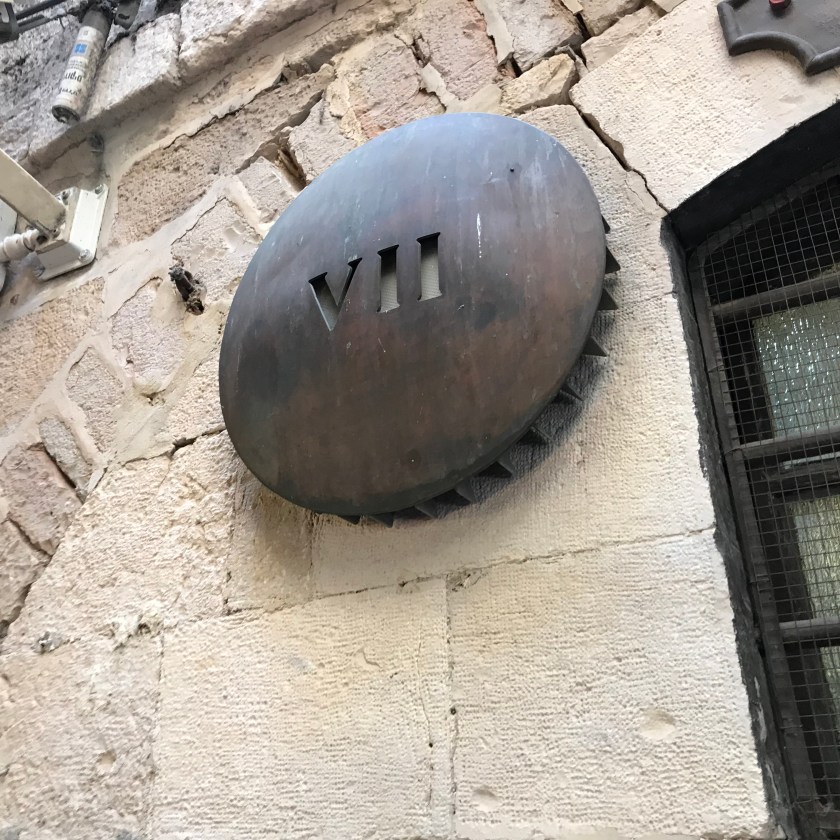
We moved from station to station, pausing at each for one of us to read the scripture and description attached to that terrible passage of Christ on the way to his execution.
Such were the crowds that Mishi decided the Church of the Holy Sepulchral was too crowded and we would have too long a wait. Instead we went to one of the most moving places for me on the entire trip: Gordon’s Garden.
Gordon was a very pious English General. While staying in Jerusalem in the late 19th century he noticed a cliff with a skull-like formation. Upon investigation he learned that there was a garden nearby. Realizing that 1) no one really knew just exactly where the crucifixion had taken place and 2) this place was just such a place that might have been the actual site of the execution of Jesus. Raising money he purchased the area. Excavations have revealed evidence of gardens near the place where executions took place, much as described in the Gospels. Further excavations revealed an empty tomb in the rock. It is completely impossible to know just where Jesus was crucified and buried, nor is it necessary. The event, not the location is the main thing. Still, the idea is intriguing – perhaps the famous site identified by Constantine’s mother in 300 AD, now covered by ostentatious Church of the Holy Sepulcher and dickered over by various denominations is not the actual location. Perhaps the real site is this simple garden just outside the walls of the city.
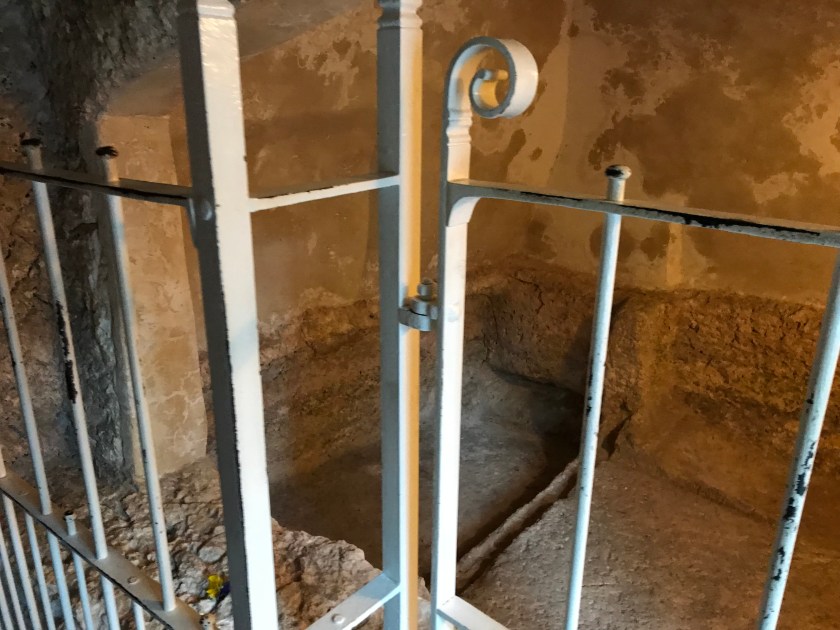
One thing for certain – today Gordon’s Garden is a quiet and peaceful place. We walked the gardens to hear a guide tell the story of the crucifixion (as if we had not been hearing it our entire lives). He was from Waco and was undoubtedly a Baptist, which is why I think he went on so long. We then went apart and shared a simple communion service together before taking a short wait to go into the small tomb. There is a small portion of the chamber, perhaps for mourners to visit the bodies, and two spaces where bodies would be laid out. A round wheel-like stone would be rolled in front of the entrance to seal it.
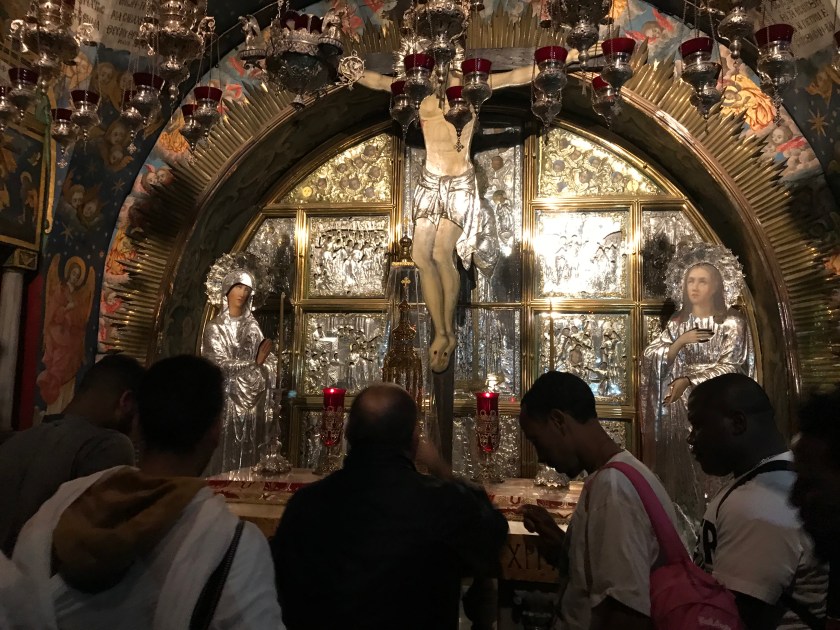
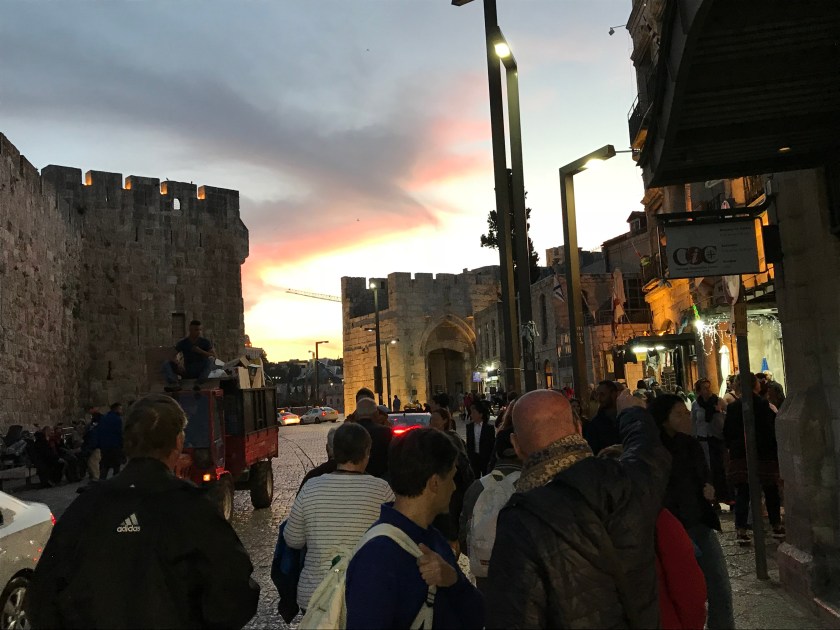
From the quiet contemplation of Gordon’s Garden it was back through the Jaffa Gate to the Church of the Holy Sepulture. In stark contrast to our previous stop this was crowded, ornate, and over the top. We did not stand in the long line to go into the empty tomb at this site. Instead we went out the Jaffa gate to a spectacular sunset and re-boarded our bus for a ride back to the hotel.
Our last day in Jerusalem was a Sunday, the beginning of the work week in Israel. Coming back in through the now familiar Jaffa gate I allowed my attention to wander gazing at the wonders of this ancient entrance to the city. I stumbled over one of the many irregularities in the paving and nearly took a tumble. It certainly hurt- more than the original injury in fact. I was able to suck it up and continue on to our Sunday service at the ELCA Lutheran church in Jerusalem. After the service we had some free time for shopping. I made a few minor purchases and then sat and enjoyed a coffee in a café on another lovely day.
Our next planed event was to accompany Chefs for Peace: Christian, Jewish, and Islamic chefs who take groups into the city to purchase ingredients from vendors, then go to a restaurant, prepare and serve the meal. Mishi, Ginny, another member of our group, and I decided to go straight to the restaurant and await them there. We spent a pleasant hour there drinking tea and discussing history and theology. The others arrived and we all enjoyed the food the chefs prepared. After the meal we had some time in hand before our scheduled visit to the Western Wall, formerly known as the Wailing Wall. The group decided to return to the hotel to wait for our turn. This turned out to be a good thing as a Palestinian terrorist stabbed a security guard near the Wall and the city was closed. There would be no visit to pray at the Western Wall. It was pointed out that God listens to our prayers no matter where we are. Still, I would have liked to have visited that famous site.
In order to catch our flight home we had a 0330 wake up call. That meant we all headed to bed right after dinner. The rest of the trip was merely siting and riding in buses and aircraft all the way back to Houston. My poor njured leg swelled remarkably on the 15 hour flight back. On the good side, our daughter-in-law gave birth to a healthy girl while I was on the way home.
My pilgrimage exceeded my high expectations. The trip was endlessly entertaining. From a secular viewpoint visiting this historic region is well worth the trip. Everyplace on earth has the same amount of history; it is just so many significant events over the millennia are crammed into this small region, cross roads of the civilizations of three continents.
As a committed Christian it was even more affected by the region. It is easy to get a feel for the man Jesus Christ; where he grew up, lived, taught, and died. I was deeply affected by many of the places. Israel is as full of deeply spiritual sites as it is of history. I understand why it is considered the Holy Land. My faith was renewed and strengthened by this pilgrimage. It came at a cost, both financially and physically, but the journey was well worth it.
 TBLOG
TBLOG 